If youve ever wondered about the sweet potatoes difference, youre not alone. These popular root vegetables come in various types, but American and Japanese sweet potatoes are among the most commonand they arent the same. Their flavor, texture, and appearance set them apart, influencing not only your taste buds but also how you cook and enjoy them. Whether you want to add variety to your meals or choose health-conscious options, understanding these differences will help.
Varieties and Flavor
What Are the Distinct Flavor Profiles?
When it comes to flavor, American sweet potatoes usually shine with a very sweet, almost creamy taste. Their flesh is moist and soft, which lends itself beautifully to dishes like mashed sweet potatoes or pies. Japanese sweet potatoes, in comparison, offer a subtler sweetness with a dense, nutty flavor thats less sugary and more earthy. This difference is what makes Japanese varieties popular for roasting or eating as simple snacks.
Cooking method also affects the final taste. Baking American sweet potatoes tends to enhance their sugary flavor, while steaming Japanese sweet potatoes preserves their natural nuttiness without adding extra moisture.

How Do Their Textures Compare?
Texture plays a big role in how sweet potatoes are used. American sweet potatoes are known for their fluffy, moist texture when cooked. This softness makes them perfect for mashing or baking into soft casseroles. Japanese sweet potatoes, however, have a firmer, starchy flesh that remains dense after cooking. They hold their shape well and wont turn mushy, making them excellent for roasting and tempura.
If you prefer your sweet potatoes creamy, American varieties are your go-to. But if you like a slightly meaty bite, try Japanese types. The texture difference also influences water content, with American sweet potatoes being moister.
What Do They Look Like?
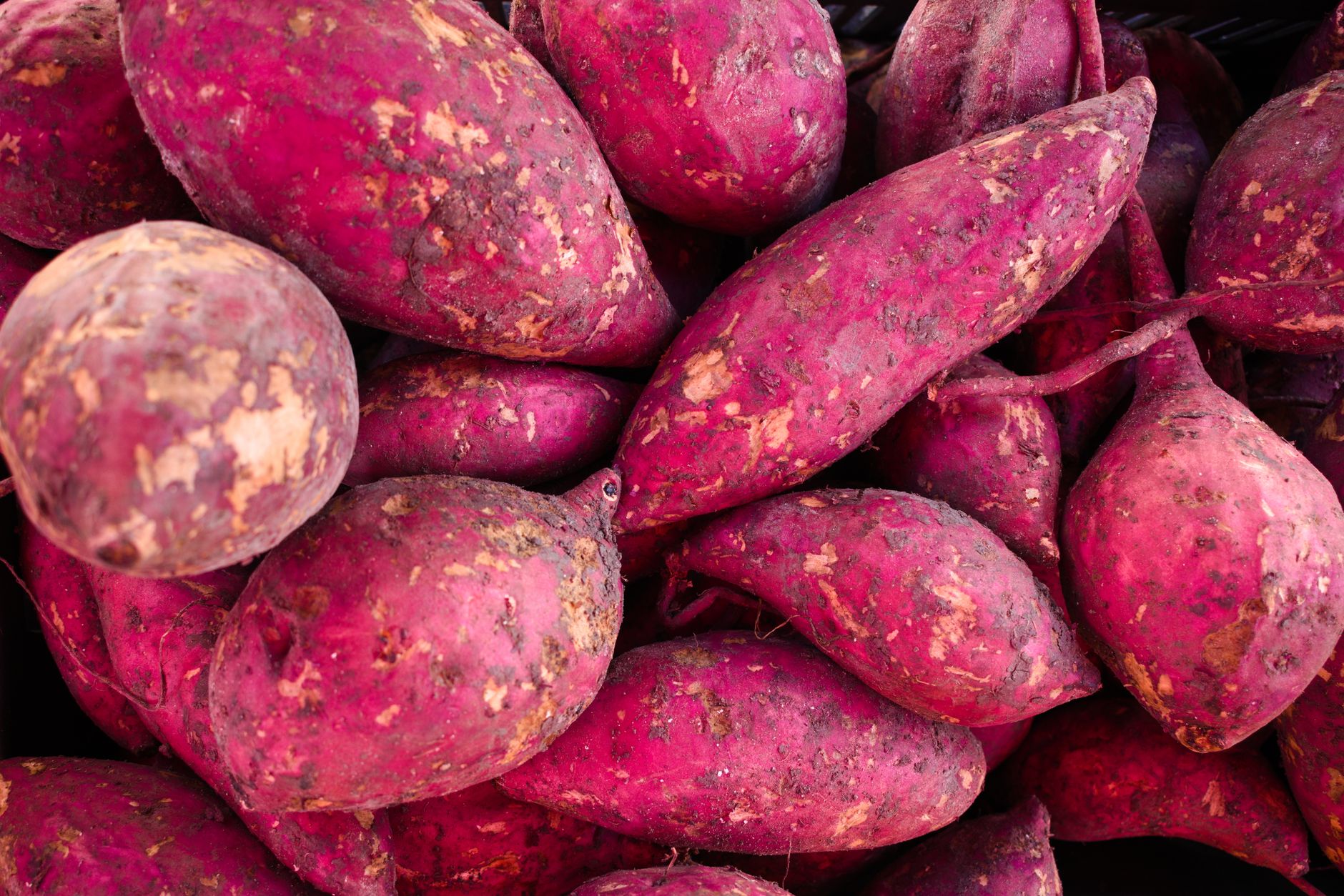
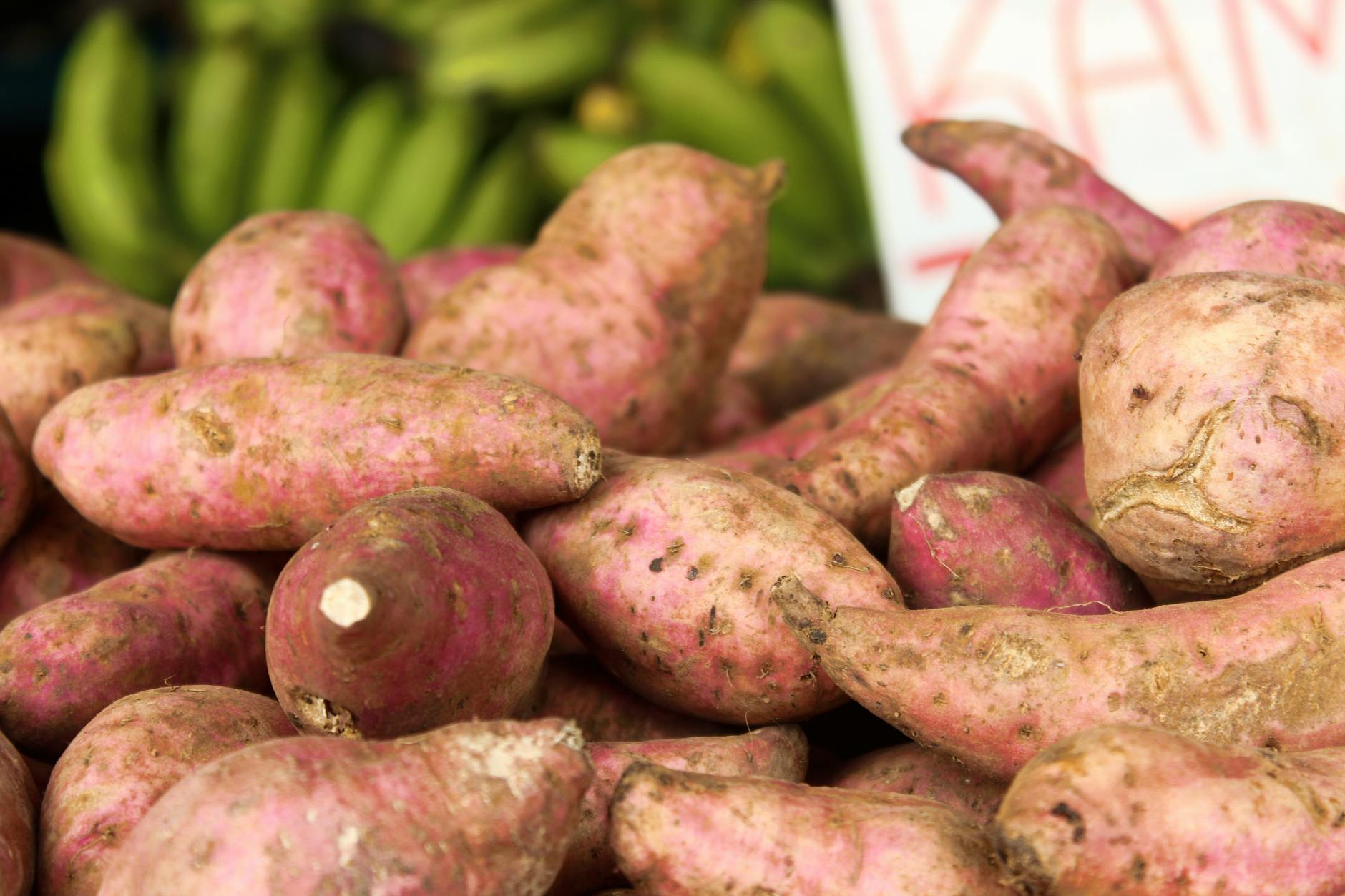
American sweet potatoes usually display bright orange flesh with smooth, reddish-brown skin. This vivid color reflects their high beta-carotene content, a good source of vitamin A. Japanese sweet potatoes are known for their striking purple or reddish skin but typically have creamy white or yellow flesh inside. Their skin is rougher and drier to touch.
| Aspect | American Sweet Potatoes | Japanese Sweet Potatoes |
|---|---|---|
| Skin Color | Light brown to reddish | Purple, reddish, or deep pink |
| Flesh Color | Bright orange | Creamy white or yellow |
| Texture | Moist, fluffy | Dense, firm |
| Flavor | Sweet, mellow | Nutty, subtly sweet |
These varieties are grown in different regions and seasons, affecting availability. American sweet potatoes dominate production in the US, especially in the Southeast, while Japanese types thrive in Japan and parts of Asia.
Nutritional Benefits
Macronutrients and Micronutrients Breakdown
American and Japanese sweet potatoes differ slightly in nutritional makeup, but both offer great health benefits. According to the USDA FoodData Central, American sweet potatoes typically contain about 86 calories per 100 grams, with 20 grams of carbohydrates, 3 grams of fiber, and a rich supply of vitamin A (in the form of beta-carotene). They also offer vitamin C, potassium, and antioxidants.
Japanese sweet potatoes have a bit fewer calories (around 90 per 100 grams), with similar fiber levels but less beta-carotene due to their lighter flesh. They stand out for their higher starch content, which provides a slower-release energy source. Additionally, Japanese varieties contain anthocyanins in their skin, compounds linked to antioxidant benefits.
| Nutrient | American Sweet Potato (per 100g) | Japanese Sweet Potato (per 100g) |
|---|---|---|
| Calories | 86 kcal | 90 kcal |
| Carbohydrates | 20 g | 21 g |
| Dietary Fiber | 3 g | 3 g |
| Vitamin A (RAE) | 961 mcg | 100 mcg |
| Potassium | 337 mg | 438 mg |
| Vitamin C | 2.4 mg | 6 mg |
Unique Health Benefits
Both types support healthy digestion and blood sugar regulation, thanks to their fiber content. The high beta-carotene in American sweet potatoes converts into vitamin A, promoting eye health and immune function. Japanese sweet potatoes anthocyanins provide anti-inflammatory properties and may enhance cardiovascular health.
For those looking for certified Halal foods that support wellness, sweet potatoes are a natural choice. When purchasing, look for trusted Halal certification logos like JAKIM, HMC, or IFANCA on packaged products to ensure compliance.
Culinary Uses
Best Recipes for American Sweet Potatoes
Because of their soft, sweet flesh, American sweet potatoes shine in classic recipes. Youll find them mashed with spices like cinnamon or nutmeg, baked into creamy pies, or sliced into fries. Their moisture content allows for smooth purees and velvety casseroles, perfect for family gatherings or festive occasions.
Heres a quick recipe idea for creamy mashed sweet potatoes:
- Peel and cube 2 large American sweet potatoes.
- Boil in salted water for 15 minutes or until tender.
- Drain and mash with 2 tablespoons of butter and cup milk.
- Add salt, pepper, and a pinch of cinnamon for warmth.
Best Recipes for Japanese Sweet Potatoes
Japanese sweet potatoes are fantastic when roasted as a simple snack, showcasing their nutty flavor. Theyre popular in tempura batter, paired with light dipping sauces, or steamed as a side dish during meals. They are also used in Asian desserts, often steamed and served with honey.
Try roasting: wash whole Japanese sweet potatoes, pierce skin a few times, and bake at 200C (400F) for 40-50 minutes or until tender inside.

Can You Substitute One for the Other?
Yes, but with a few considerations. Using Japanese sweet potatoes instead of American in a recipe may result in a less sweet, firmer dish. Cooking times can differ. For example, Japanese types may need longer baking for softness but wont mash as creamy. Flavors shift from sugary to earthy. Recipes like pies or casseroles might lose their characteristic texture and sweetness.
Adjust spices and liquid ingredients accordingly. If you want to swap in recipes focused on sweetness, add a little honey or brown sugar. For savory preparations, both work well.
For a broader wholesome diet, pairing sweet potatoes with other wholesome ingredients is smart. Explore healthy foods to lose weight to keep your meals balanced.
Storage and Handling
Store sweet potatoes in a cool, dark, and well-ventilated place to maximize lifespan. American varieties typically last 1 to 2 weeks when kept between 13C to 16C (55F to 60F). Japanese types can last slightly longer, up to 3 weeks, due to their drier skin.
Do not refrigerate raw sweet potatoes as this can cause hard centers and alter flavor. Once cooked, store leftovers in airtight containers in the refrigerator for 5 to 7 days.
Common Questions About Sweet Potatoes Difference
Are Sweet Potatoes the Same as Yams?
No. Sweet potatoes and yams are often confused, but they are different species. Yams have rough, scaly skin and are starchier and drier. Sweet potatoes, especially American ones, are sweeter and moister. Labels may mislead, so check carefully.
Is One Type Healthier Than the Other?
Both have comparable nutrition but differ slightly in vitamins. American sweet potatoes offer more vitamin A, while Japanese types contain higher potassium and antioxidants. They complement health well; neither is better overall.
How Do You Know if Sweet Potatoes Are Halal?
Sweet potatoes themselves are naturally Halal, but check processed or packaged items for Halal certification. Look for logos from recognized bodies like JAKIM, HMC, or IFANCA on the label to confirm.
Whats the Best Way to Cook Sweet Potatoes for Maximum Flavor?
Roasting at 200C (400F) enhances sweetness and texture. Baking whole preserves nutrients, while steaming keeps the taste mild and dense, especially for Japanese varieties.
Do Sweet Potatoes Affect Blood Sugar Levels?
They have a moderate glycemic index and fiber content that promote slow digestion. Japanese types with denser starch may result in an even gentler impact, making sweet potatoes a balanced choice for blood sugar control.
Can You Freeze Cooked Sweet Potatoes?
Yes, cooked sweet potatoes freeze well for up to 3 months. Cool completely before placing in airtight freezer bags. Thaw in the fridge overnight and reheat gently.
How Should I Choose Sweet Potatoes When Shopping?
Look for firm, blemish-free tubers without soft spots. Avoid shriveled or sprouting potatoes. For Halal assurance on packaged products, check certified logos and ingredient lists.
Pro Tips for Choosing and Cooking Sweet Potatoes
A common buying mistake is picking soft or damaged potatoes, which spoil fast. Choose firm roots with intact skins. Cheap versions may be less fresh or come without proper Halal traceability, affecting quality.
One expert tip: For roasting, pierce the skin slightly to let steam escape and avoid soggy texture. This step enhances caramelization and flavor.
In recipes calling for mashing, add a touch of olive oil or butter to improve creaminess. For Japanese sweet potatoes, pair with light spices like cinnamon or nutmeg to balance their earthiness without overpowering.
Want quick, satisfying meals? Try combining sweet potatoes with your favorite gluten free fast food options for a nutritious boost.
More You Might Like
Explore our guide on healthy foods to lose weight, perfect for pairing with sweet potatoes in your balanced diet.
Check out snacks and meals suitable for dietary restrictions using expert tips in our gluten free fast food post.
Conclusion
The sweet potatoes difference lies mainly in flavor, texture, and nutrition. American types offer sweetness and moisture, while Japanese varieties bring nutty, dense flesh to the table. Both are nutritious and versatile in Halal and health-conscious kitchens. Next time you shop or cook, notice these differences and experimentyour meals will gain new depth and richness. Feel free to share your favorite sweet potato dishes or questions below.
FAQs
Is sweet potatoes difference actually Halal — what should I check on the label?
Sweet potatoes themselves are naturally Halal. For processed or packaged products, look for certification logos from recognized bodies like JAKIM, HMC, or IFANCA on the label to ensure they meet Halal standards.
How long do sweet potatoes last after opening or cooking?
Raw sweet potatoes last 1 to 3 weeks depending on the variety when stored in a cool, dark place. Cooked sweet potatoes should be refrigerated in airtight containers and consumed within 5 to 7 days for best quality.
What is the difference between sweet potatoes and yams?
Sweet potatoes and yams are different species: yams have rough, scaly skin and are starchier and drier. Sweet potatoes, especially American types, are sweeter with moist flesh. Labels can be misleading, so check carefully when purchasing.
Are sweet potatoes safe to eat daily for health benefits?
Yes, sweet potatoes are nutrient-rich and safe for daily consumption. Their fiber and moderate glycemic index support digestion and blood sugar control when eaten as part of a balanced diet.
Where can I buy good quality sweet potatoes with Halal assurance?
Buy sweet potatoes from trusted grocery stores or specialty markets offering Halal-certified products. Packaged items should display Halal certification marks like JAKIM, HMC, or IFANCA for assurance.