Staring at a sealed wine bottle and no corkscrew nearby can be frustrating. Whether youre hosting guests, enjoying a casual evening, or attending a picnic, knowing how to open wine bottle safely without a corkscrew comes in handy. With some simple tools and a bit of care, you can enjoy your wine without risk of damage or spills. Here are five effective ways to pop that cork and savor your favorite bottle.
Why Its Useful
Not everyone carries a corkscrew, yet a sealed bottle waits. Being resourceful helps you avoid ruining your wine or risking injury. Handling the cork carefully preserves the refreshing taste and prevents bits of cork from falling into your glass. Sometimes, these methods even impress friends when you demonstrate quick problem-solving skills. However, for premium or older wines, consider professional tools to avoid damage.
5 Ways to Open
1. Push the Cork Into the Bottle
This straightforward method uses blunt pressure to push the cork inside the bottle. First, remove any foil covering the cork. Then, apply steady pressure with the handle of a wooden spoon, bottle opener, or similar item. Hold the bottle firmly and gently press down until the cork slides into the wine. Be prepared: the cork may float or sink, so pour carefully to avoid pieces in your glass.
This method works best for natural corks that are intact and slightly moist. Safety tip: ensure your pressing tool is smooth and clean to avoid bottle damage.
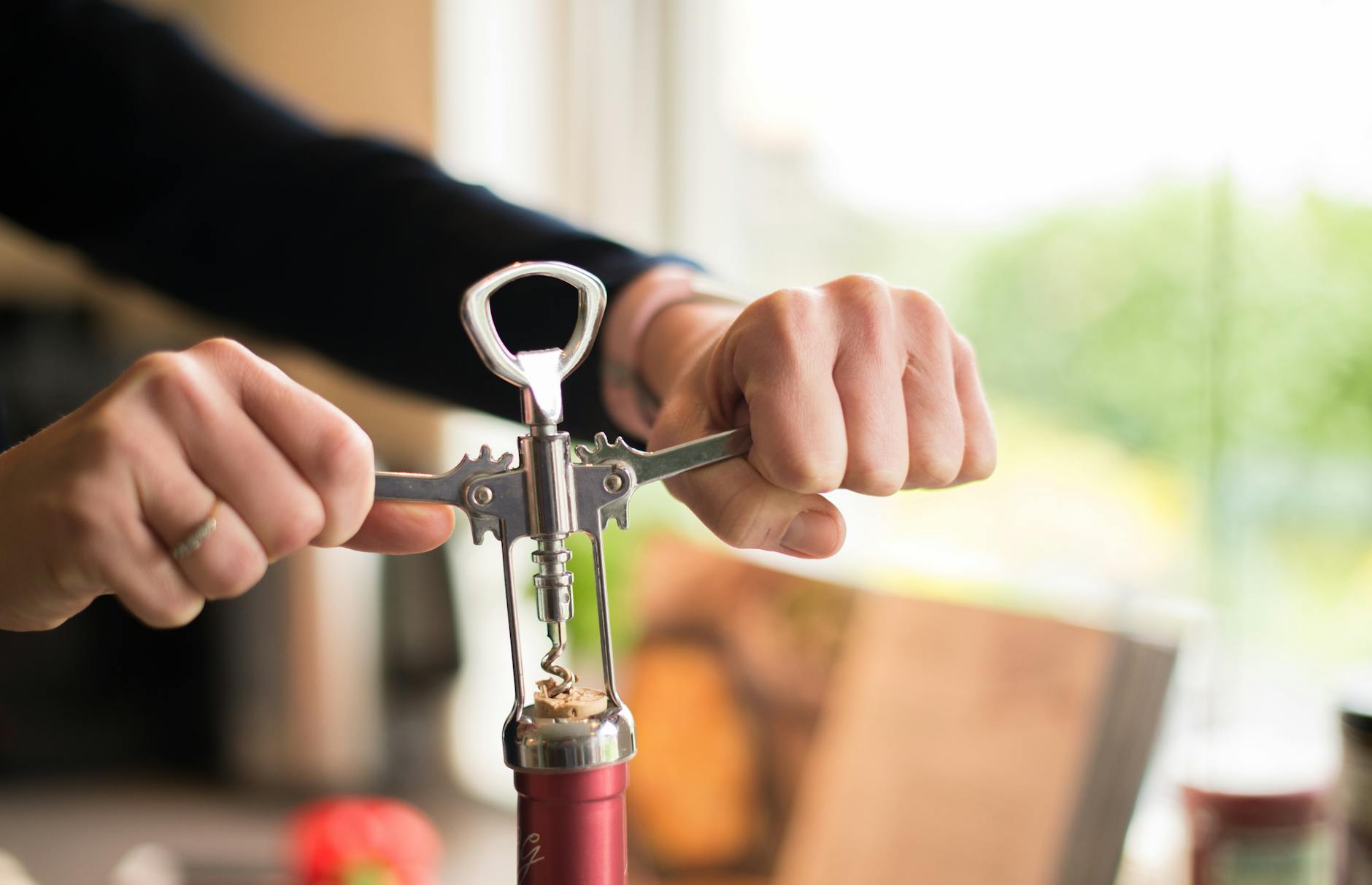
2. Use a Knife or Serrated Blade to Shimmy Out the Cork
The shimmy technique involves gently wiggling a thin knife or serrated blade between the cork and bottle neck to gradually ease the cork out. Insert the blade carefully, twisting it slightly as you pull upward. Keep your hand steady and slow to prevent the cork from breaking or slipping into the bottle.
A serrated dessert knife works well. Choose a blade you trust to avoid injury and never force the cork abruptly. This method offers more control for bottles with stubborn corks but requires patience and care.
3. Repurpose an Old Key or Screw as a Makeshift Cork Opener
Household items like a sturdy key or a long screw can double as a cork remover. Insert the key or screw diagonally into the cork, twisting it deep enough to provide grip. Using pliers or firm fingers, pull the cork out slowly while twisting in the opposite direction. This mimics a proper corkscrews leverage.
Maximize grip by selecting a key with a rough edge or a screw at least 1.5 inches long. Take care not to push the cork further inside. This creative hack can save the day using common tools you already have around.
Additional Wine Tips
4. Use the Shoe Slap Method to Push the Cork Out
An unconventional but effective hack involves cushioning the bottle base in a sturdy shoe and gently slapping it against a wall. The repeated impact pushes the cork slowly out. To try this, place the bottle heel-first inside a sneaker, keep it horizontal, and tap the shoe against a flat surface steadily.
This method requires patience and caution to avoid breaking the bottle. Its best for plastic corks or natural corks that resist twisting. The slow, consistent force can loosen the cork without special tools.

5. Screw and Pull Method Using Household Screws and Pliers
This method works well with a thick screw and pliers. Insert the screw straight down into the cork with a screwdriver, leaving around a half-inch sticking out. Grip the screw head firmly with pliers and pull slowly while twisting the bottle slightly to ease the cork out.
Choose screws with coarse threads for better hold in the cork. This method provides decent leverage, especially when you lack a traditional corkscrew but want to avoid pushing the cork in or breaking it.
Tips and Best Practices
- Avoid alternative opening methods for very old or expensive bottles, where improper pulling may ruin the vintage wine.
- After opening, preserve leftover wine using air-tight cork substitutes or wine stoppers to prevent oxidation.
- Store open bottles in the refrigerator where possible this slows spoilage and keeps flavors fresh for 35 days.
- Investing in a reliable corkscrew or a trusted electric opener ensures youre always ready without hassle.
Common Issues and Solutions
What to Do If the Cork Breaks or Crumbles
If the cork breaks during removal, pour the wine through a clean coffee filter or fine mesh strainer to catch cork bits. Avoid using excessive force when pulling next time. To minimize this risk, ensure corks are moist and temperature-controlled before opening.
How to Avoid Wine Spills and Breakage
Place the wine bottle on a stable surface with good grip before opening. Use towels or cloth to steady your grip when applying pressure. Opening slowly reduces sudden spills and enhances safety, especially with glass.
How to Keep Wine Fresh After Unconventional Opening
After opening without a corkscrew, reseal the bottle with a vacuum wine stopper or a tight-fitting silicone cork. Store the bottle upright in a refrigerator to preserve flavors for several days. Avoid leaving the wine exposed to air for long periods.
Halal-conscious readers should ensure any replacements for corks or stoppers are made from food-safe, certified materials to maintain beverage purity.
When is the Best Time to Drink Wine?
Wine often tastes best at specific temperatures: red wines at 1518C (5964F), white wines chilled around 713C (4555F). Serving wine at its ideal temperature highlights its intricate flavors.
Enjoy your wine within 35 days of opening for best freshness, refrigerated and sealed carefully. As defined by JAKIM Halal certification standards, many wines carry strict labeling to guide proper consumption and storage, which helps maintain both quality and Halal compliance.
Is an Open Wine Bottle Safe to Drink Without a Corkscrew?
Yes, opening a wine bottle without a corkscrew is safe if you use the right methods and caution. Avoid broken glass, spilled wine, or cork debris by choosing a suitable technique and handling the bottle steadily. This knowledge adds confidence, so you never miss enjoying your wine due to missing tools.
Can I Use Any Screw or Key to Open Wine?
Not all screws or keys are suitable. Choose thick, coarse-threaded screws around 1.52 inches long or sturdy keys without sharp edges. Avoid rusty or dirty hardware to prevent contamination. Cleanliness and grip strength matter most for safety and effectiveness.
Will Pushing the Cork Into the Bottle Affect Taste?
Sometimes cork pieces enter the wine when pushed in. While this doesnt spoil flavor, sediment may affect drinking experience. Use a fine strainer if needed. This method is best as a last resort and for casual, everyday wines.
Are Plastic Corks Easier to Open Without Tools?
Yes, plastic or synthetic corks tend to be more flexible and less prone to crumbling, making them easier to open with alternative methods like pushing or twisting. Many Halal-certified wines use synthetic corks to ensure quality and hygiene.
Can Unconventional Opening Damage the Bottle?
Yes, improper force or impact risks cracking or breaking the glass. Always apply gentle, even pressure. The shoe slap method and pushing cork in should be done carefully on a stable surface to avoid accidents.
How Long Does Wine Last After Opening Without a Proper Seal?
Wine exposed to air spoils faster, usually within 2448 hours. Using vacuum stoppers or airtight corks extends freshness to 35 days refrigerated. Without sealing, oxidation quickly dulls aroma and taste.
What Halal Certifications Should I Check on Wine?
Look for logos from JAKIM, HMC, or IFANCA when selecting wine labeled Halal. These certificates ensure that fermentation and ingredients meet strict Islamic dietary laws. Not all wines are halal-certified, so labels and brand transparency are key.
Pro Tips for Opening Wine Bottle
- Always warm the bottle to room temperature before opening. Cold wine may cause corks to shrink and break.
- Keep a towel handy to grip slippery bottles during trickier removal methods.
- If you often travel or picnic, consider a compact, halal-certified corkscrew to avoid struggles.
Knowing how to open wine without traditional tools adds fun and utility to your wine moments. For creative drink ideas, check out quality options like Cutwater canned cocktails, or discover vibrant nightlife scenes at top Cocktail bars nyc.
More You Might Like
Explore our guides on selecting halal-certified beverages to complement your wine evenings. Check recipes that pair beautifully with wines for a complete culinary experience.
Conclusion
Opening a wine bottle without a corkscrew is easier than you think with these five practical methods. Whether pushing, twisting, or tapping, remember to prioritize safety and wine preservation. The next time your corkscrew is missing, try these tips and enjoy your wine without fuss. Feel free to share your own experiences or questions below.
FAQs
Is open wine bottle actually Halal — what should I check on the label?
To ensure a wine bottle is Halal, look for certification labels from authorities like JAKIM, HMC, or IFANCA. These indicate the wine complies with Islamic dietary laws regarding ingredients and fermentation. Not all wines are Halal-certified, so checking the label and brand transparency is essential before purchase or consumption.
How long does wine last after opening an open wine bottle?
Once opened, wine usually lasts 24 to 48 hours if not sealed properly. Using vacuum stoppers or airtight corks and storing in a refrigerator can extend freshness up to 35 days. Exposure to air accelerates oxidation, which dulls taste and aroma, so proper sealing is key.
What are the differences between opening methods versus a traditional corkscrew?
Alternative methods like pushing or using household items may risk cork damage or wine spills and require more care. Traditional corkscrews provide controlled, safe leverage and minimize the chance of broken corks or bottle damage. Each method varies in ease, safety, and suitability depending on the cork type.
Is it safe to open a wine bottle daily using these alternative methods?
Yes, using safe and gentle techniques is generally safe for daily use but requires patience and care to avoid glass breakage or cork contamination. Always use clean tools and steady pressure to minimize risks. For frequent use, investing in a reliable corkscrew is recommended.
Where can I buy halal-certified wine and proper open wine bottle tools?
Halal-certified wines and corkscrews are available via specialized online retailers, halal marketplaces, or select beverage stores. Always verify certification claims and product reviews. Many halal stores also offer wine accessories designed to fit Islamic guidelines and ensure hygienic use.