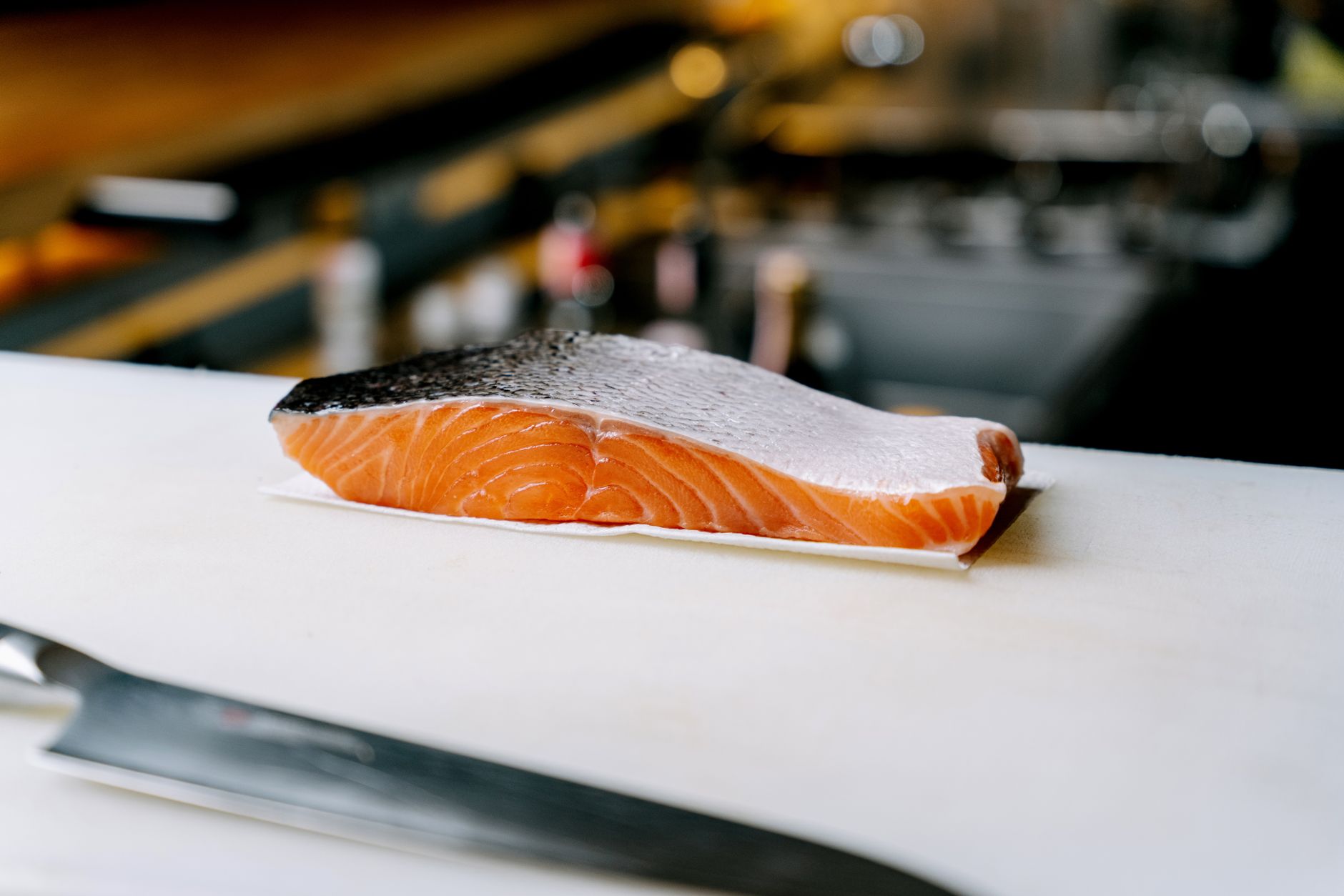
Struggling with slippery, raw salmon skin is one of the most frustrating kitchen tasks. You end up wasting precious flesh and making a mess. But there is a simple, almost magical trick that changes everything. Learning how to effectively remove salmon skin using just boiling water takes seconds and keeps your fillet perfectly intact. This method is a game-changer for anyone cooking Halal-certified salmon at home.
Forget the struggle of a dull knife slipping across the surface. This thermal shock technique leverages basic science to separate the skin from the flesh cleanly. Whether you are prepping for a delicate poach or a spicy salmon burger, this hack ensures you get restaurant-quality results with zero fuss.

Why You Might Want to Remove Salmon Skin
Benefits of Removing Salmon Skin
Many home cooks prefer working with skinless fillets for specific health and culinary reasons. Removing the skin can reduce the overall fat content of the portion. Some people also prefer to avoid the potential contaminants that can settle on the skin during the fish‘s life.
From a cooking standpoint, skinless salmon allows marinades and dry rubs to penetrate the flesh directly. This results in a more intense flavor profile. Nutritionists often point out that while the skin is nutritious, removing it is perfectly fine if you prefer the texture, as the omega-3 fatty acids are abundant in the flesh itself.
When to Keep Salmon Skin On
Of course, there are times when the skin is your best friend in the kitchen. Pan-searing a fillet with the skin on creates a shatteringly crispy texture that contrasts beautifully with the tender flesh. Grilling also benefits from the skin, as it acts as a protective barrier against the high heat.
Keeping the skin on is also excellent for baking, as it helps lock in moisture. If you enjoy the crispy skin as a treat, it provides healthy fats and a rich flavor. The choice between keeping and removing salmon skin ultimately depends on your recipe and personal preference for texture.
The Boiling Water Salmon Skin Removal Hack Explained
| Prep Time | Cook Time | Total Time | Diet Tags |
| 5 minutes | 1 minute | 6 minutes | Halal, Gluten-Free, Keto-Friendly, Paleo |
Step-by-Step Guide on How to Skin Salmon With Boiling Water
This method is shockingly simple and works every time. Follow these exact steps for flawless results.
- Step 1: Bring a kettle or small pot of water to a rolling boil (100 degrees C / 212 degrees F).
- Step 2: Place your Halal-certified salmon fillet on a wire rack set over a sink or a heatproof bowl. Pat the skin dry with a paper towel.
- Step 3: Carefully pour the boiling water directly over the skin side of the fillet. Ensure you cover the entire surface evenly.
- Step 4: Wait for 10 to 15 seconds. You will see the skin visibly tighten and curl away from the edges of the flesh.
- Step 5: Starting at a corner, simply grip the skin with your fingers or use a pair of tweezers. It should slide off the flesh in one clean piece.
Why This Hack Works
The science behind this hack is simple food chemistry. Salmon skin is rich in collagen. When collagen is hit with extreme heat, it contracts rapidly and shrinks. This sudden contraction breaks the connective tissue that binds the skin to the flesh.
Because the heat is applied so quickly and removed, the flesh itself remains raw and untouched. This allows you to remove salmon skin with zero cooking of the meat, leaving it perfectly ready for your recipe.

Alternative Methods to Skin Salmon
How to Skin Salmon Raw Without Boiling Water
If you prefer the traditional route, you need a very sharp, flexible fillet knife. Place the fillet skin-side down on a cutting board. Start at the tail end, making a small cut through the flesh down to the skin but not through it.
Grip the skin tightly with your free hand. Angle the knife blade down towards the skin and use a smooth, sawing motion against the skin while pulling the skin taut. This requires practice but gives you complete control.
Using Tools for Salmon Skin Removal
Specialized fish skinning pliers or tweezers are a great option for those who cook fish often. After scoring the skin lightly, you can grip the edge and pull it away. This method works best when the salmon is very cold.
These tools are also excellent for removing pin bones. Investing in a good pair of kitchen tweezers can elevate your fish preparation significantly.
| Method | Ease of Use | Time Required | Mess Level | Best For |
| Boiling Water Hack | Very Easy | 1 minute | Low | Beginners and quick prep |
| Traditional Knife | Medium | 3 minutes | Medium | Experienced home cooks |
| Skinning Pliers | Easy | 2 minutes | Low | Removing bones simultaneously |
Pro Tips for Perfect Salmon Skin Removal
Mastering this technique opens up a world of culinary possibilities. Here are the crucial details that separate good results from perfect ones.
Common Error to Avoid: Using warm or just hot water instead of a rolling boil. The rapid thermal shock is non-negotiable. If the water isn‘t at a full 100 degrees C, the collagen won‘t contract instantly. You will end up with a messy, half-cooked exterior.
Expert Upgrade: Do not throw the skin away! After you remove salmon skin using this hack, pat it dry, season it with salt, and pan-fry it in a little oil until crispy. It makes an incredible garnish for salads, soups, or pasta dishes.
Flavor Balance: If you decide to roast salmon with the skin on, the key to crispiness is relentless dryness. Pat the skin with paper towels and leave it uncovered in the fridge for an hour to dry out the surface. This ensures it crackles instead of steaming.
Tips for Easy Salmon Preparation Beyond Skin Removal
How to Handle Salmon for Best Results
Start with high-quality, fresh fillets from a trusted Halal source. The flesh should be firm and bounce back when pressed. It should smell clean like the sea, not fishy or ammonia-like.
Use a reliable Meat thermometer to check the internal temperature. Cooking skinless salmon to 145 degrees F (63 degrees C) guarantees safety without drying it out.
Cooking Methods for Skinless Salmon
Skinless salmon is incredibly versatile. It poaches beautifully in a flavorful broth or court bouillon. It is perfect for baking en papillote (in parchment paper) with vegetables and herbs.
You can also chop it finely for salmon burgers or kebabs. If you are prepping for the week, you might find it just as helpful to learn how to boil frozen chicken quickly for salads and sandwiches.
How to Store Skinless Salmon Properly
If you are not cooking the salmon immediately after skinning, proper storage is critical for food safety and quality. Wrap the fillet tightly in plastic wrap or place it in an airtight container.
Store it in the coldest part of your refrigerator, usually the back of the bottom shelf. It will keep fresh for 1 to 2 days. For longer storage, freeze it for up to 3 months. Thaw it slowly in the refrigerator overnight before using it.
Potential Risks and Considerations When Removing Salmon Skin
Nutritional Trade-Offs
While the flesh contains the majority of the omega-3 fatty acids, the skin does hold a high concentration of vitamin D and healthy unsaturated fats. Additionally, the skin contributes to the overall satiety of the dish.
If you are trying to manage your calorie or mercury intake, removing the skin is a good strategy. The choice is purely personal. A balanced diet that sometimes includes skinless salmon and sometimes includes the skin is perfectly healthy.
Food Safety Concerns
Whether you keep the skin on or remove it, handling raw salmon safely is paramount. Always wash your hands, cutting board, and knife with hot soapy water immediately after handling the fish.
Use separate cutting boards for produce and raw proteins. This prevents cross-contamination. Cooking the salmon to the proper internal temperature kills any potential pathogens, making it safe for consumption.

When is the best time to eat salmon without its skin?
Salmon skin is best enjoyed freshly cooked when it is still crispy. If you remove the skin before cooking, the best time to eat the salmon is immediately after it is cooked. The flesh is moist and flaky at this point. Letting it sit too long under a heat lamp can dry it out significantly.
Does the boiling water hack work on frozen salmon?
No, this technique only works properly on fresh or fully thawed salmon. If the fillet is partially frozen, the heat from the water will not penetrate evenly. The collagen in the skin will not contract uniformly. Always thaw your salmon completely in the refrigerator before attempting this hack.
What knife is best for traditional salmon skinning?
A long, flexible fillet knife is the best tool for the job. The flexibility allows the blade to follow the natural curve of the fillet. This minimizes wasted flesh. A stiff chef‘s knife requires more downward pressure and often results in tearing the delicate meat.
Can I reuse the boiling water for cooking?
It is highly recommended to discard the water used for skinning. This water contains raw proteins and potential bacteria from the surface of the fish. Pour it down the drain to ensure kitchen hygiene. Do not use it to blanch vegetables or cook grains.
Why does my salmon fall apart when I try to skin it raw?
This usually happens for two reasons. First, your knife is likely dull. A dull knife crushes the flesh instead of slicing through the connective tissue. Second, the salmon may be too warm. Place it in the freezer for 15 minutes to firm it up. This makes the flesh more resistant to tearing.
Is it better to skin salmon before or after cooking?
It depends on your cooking method. For pan-searing, cook it skin-on to get a crispy crust, then remove it if desired. For poaching or slow-baking, removing the skin beforehand results in a more delicate texture that absorbs flavors better. The boiling water hack makes the pre-cook removal incredibly easy.
Can I use this hack on other types of fish?
Absolutely. This technique is excellent for other delicate, thin-skinned fish such as trout, snapper, and sea bass. It is particularly useful for varieties where the skin has a strong flavor or tough texture that you want to avoid in the final dish.
More You Might Like
If you enjoyed mastering this fish preparation technique, you will find our guide on the perfect Meat thermometer extremely helpful. It takes the guesswork out of cooking proteins and ensures perfect results every time.
Looking for more Halal kitchen shortcuts? Check out our detailed tutorial on how to boil frozen chicken for quick, tender meal prep that fits your busy schedule.
Conclusion
This boiling water hack completely changes how you approach fish prep. It removes the anxiety and mess associated with raw fish handling. Now you can confidently remove salmon skin in seconds, saving time and preserving the quality of your fillet. Give this method a try the next time you cook with salmon. You will wonder why you ever struggled with a knife. Share your success or ask questions in the comments below.
FAQs
When is the best time to eat or drink remove salmon skin?
The best time to enjoy salmon without its skin is immediately after cooking. For crispy skin, eat it fresh. If you remove skin before cooking, cook the fillet right away and serve as soon as it reaches 145°F. The flesh stays moist and flaky. Avoid letting it sit under heat, which dries it out.
How long can skinless salmon be stored in the refrigerator?
After removing the skin, wrap the fillet tightly in plastic wrap or place in an airtight container. Store in the coldest part of the fridge—usually the back of the bottom shelf. It stays fresh for 1 to 2 days. For longer storage, freeze for up to 3 months and thaw overnight in the refrigerator.
How does the boiling water hack compare to using a knife for skin removal?
The boiling water hack is much easier and faster, taking only 1 minute with low mess. A traditional knife method requires a sharp, flexible fillet knife and takes about 3 minutes with medium mess. The hack is ideal for beginners, while experienced cooks may prefer the control of a knife. Both yield clean results when done correctly.
What are the food safety tips for handling raw salmon?
Always wash hands, cutting board, and knife with hot soapy water immediately after handling raw salmon. Use separate boards for produce and raw proteins to prevent cross-contamination. Cook skinless salmon to an internal temperature of 145°F (63°C) to kill any potential pathogens. Discard the water used for the boiling hack.
Where can I buy high-quality Halal salmon?
Look for Halal-certified salmon from trusted fishmongers, Halal grocery stores, or online retailers specializing in Halal meats. Choose fillets that are firm, bounce back when pressed, and smell clean like the sea—not fishy or ammonia-like. Check the packaging for a clear Halal certification label to ensure compliance.