You spot a rough, black skillet at a thrift store for fifteen dollars. It looks old, maybe a little rusty, but something tells you to grab it. You just found a thrifted cast iron skillet that could outlast any modern non-stick pan. Seasoned cooks know this secret. A well-made vintage piece often delivers better heat control and a naturally slick surface that factory-seasoned pans take years to develop. Plus, you save serious money. Whether you cook Halal meals daily or just want one reliable pan, understanding what makes these skillets special helps you make the right choice.
What Makes Thrifted Cast Iron Skillets So Appealing?
Vintage cookware carries a certain charm that mass-produced pans simply lack. Each scratch, each dark patina tells a story of meals cooked and memories made. But beyond nostalgia, there are practical reasons why savvy shoppers hunt for second-hand cast iron.
Are Thrifted Cast Iron Skillets Cheaper Than New Ones?
Absolutely. A brand new Lodge 12-inch skillet costs around forty to fifty dollars. A thrifted piece of similar size often sells for ten to twenty dollars at goodwill stores, flea markets, or garage sales. High-end vintage brands like Griswold or Wagner can fetch higher prices online, but in physical thrift stores, they frequently slip through unnoticed at bargain prices. According to pricing data from eBay sold listings, vintage cast iron often holds its value, but buying local keeps your costs low.
Why Is Pre-Seasoned Cast Iron a Big Deal?
Seasoning is the layer of polymerized oil that makes cast iron non-stick. A well-seasoned thrifted skillet has years of built-up seasoning that creates a smoother, more non-stick cooking surface than a brand-new bare pan. New skillets often arrive with a thin factory seasoning that requires multiple rounds of home seasoning to reach peak performance. A thrifted skillet that looks dark and shiny already has that work done for you. According to the American Cast Iron Cookware Association, properly seasoned vintage pans can rival modern non-stick coatings without the health concerns.
What Should You Check Before Buying Second-Hand Cast Iron?
Not every thrifted skillet is a gem. You need to inspect carefully before handing over your cash. Start with a visual once-over. Look for cracks, deep pitting, or warping. A cracked skillet is dangerous and should be left behind. Warping causes uneven heating on glass-top stoves. Surface rust is fixable, but deep rust pitting may be too far gone.

Detailed Cast Iron Skillet Condition Checklist
- Rust presence and severity Surface rust can be scrubbed off. Red flaky rust covering the entire pan means more work. Deep pitting from rust may affect cooking performance.
- Surface smoothness Run your fingers across the cooking surface. Vintage skillets were often machined smooth, which is preferred. Rough, bumpy surfaces may require significant sanding.
- Handle stability Wiggle the handle. It should feel solid with no loose rivets or cracks where it meets the pan body.
- Brand markings Flip the skillet over. Look for raised lettering, size numbers, and maker marks. These help identify the manufacturer and approximate age.
- Flatness Place the skillet upside down on a flat counter. It should sit evenly without rocking. Warped pans cause hot spots.
Here is a quick-reference buyer‘s checklist for thrifted cast iron skillets.
| Certification | Price Range | Common Formats | Shelf Life | Key Allergens |
|---|---|---|---|---|
| Brand markings, heat ring, size stamp | $8$50 typical thrift store pricing | 6-inch, 8-inch, 10-inch, 12-inch | Indefinite with proper care and re-seasoning | None inherent; check for nickel plating or enamel coatings |
How to Prepare a Thrifted Cast Iron Skillet for Use
Once you bring your thrifted skillet home, it needs some attention before it hits the stove. The process depends on its current condition. A lightly rusted pan requires different steps than one with thick, flaking old seasoning.
What‘s the Best Way to Remove Rust and Old Seasoning?
For light surface rust, scrub with coarse salt and a potato half. Cut a potato in half, dip the cut side in coarse salt, and scrub the rusted surface. The moisture from the potato activates the salt as a gentle abrasive. Rinse and dry immediately. For heavier rust, use white vinegar diluted with water at a 1:1 ratio. Soak for 30 minutes, then scrub with a stainless steel scrubber. Never soak longer than one hour vinegar can etch the iron. For removing old, flaky seasoning, spray the skillet with oven cleaner containing sodium hydroxide. Place it in a sealed plastic bag for 24 hours, then wash thoroughly. Always wear gloves during chemical cleaning. According to the USDA Food Safety guidelines, thorough rinsing and re-seasoning ensure the skillet is safe for cooking.
How to Re-Season Your Cast Iron Skillet for Maximum Non-Stick?
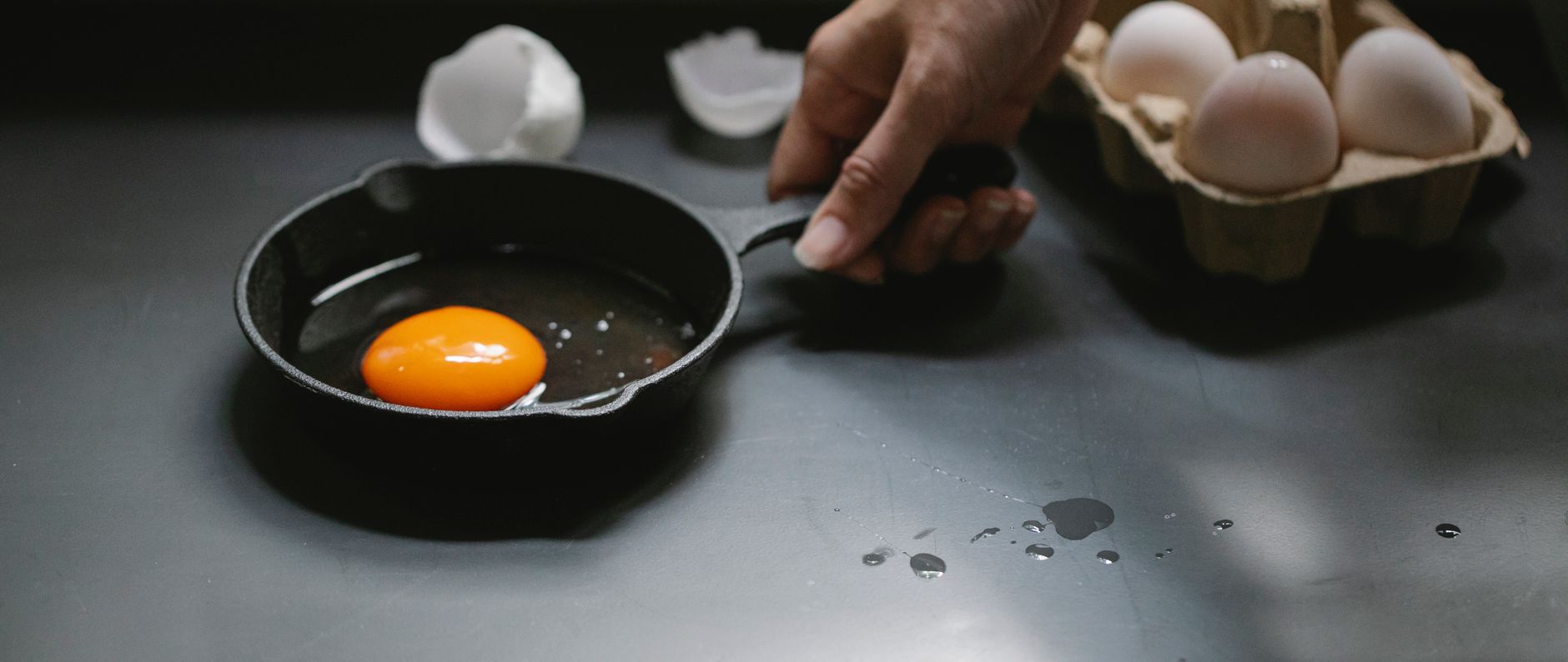
After cleaning, you need to rebuild the protective seasoning layer. Preheat your oven to 450 degrees Fahrenheit. Dry the skillet completely on a stovetop burner over low heat for five minutes moisture is the enemy of seasoning. Apply a very thin layer of oil using a lint-free cloth or paper towel. Wipe off as much oil as possible. The skillet should look dry, not greasy. Place it upside down on the middle oven rack with a baking sheet on the rack below to catch drips. Bake for one hour. Turn off the oven and let the skillet cool inside. Repeat this process two to three times for a strong foundation.
Common Seasoning Oils and Their Pros & Cons
- Flaxseed oil Creates a hard, durable seasoning. Downside: can flake if applied too thickly. Needs multiple thin coats.
- Vegetable oil Reliable and inexpensive. Polymerizes well at 450 degrees. Good all-around choice for most cooks.
- Shortening (Crisco) Classic choice used for generations. Produces a dark, even seasoning. Easy to apply sparingly.
- Grapeseed oil High smoke point of 420 degrees. Creates a slick finish. Slightly more expensive than vegetable oil.
- Avocado oil Highest smoke point at 520 degrees. Best for high-heat seasoning but costly for multiple rounds.
The Benefits and Risks of Buying Used Cast Iron Skillets
Every thrifted skillet comes with trade-offs. Knowing both sides helps you decide whether a particular piece is worth your time and money.
What Are the Health and Safety Considerations?
Cast iron is naturally non-toxic. It does not contain PFOA, PFAS, or other synthetic chemicals found in some non-stick coatings. However, a thrifted skillet may have been stored poorly or exposed to cleaning chemicals. Heavy rust can harbor bacteria in its porous surface. That is why thorough cleaning and re-seasoning are essential. According to the Halal Certification standards from JAKIM, cooking surfaces must be free from contaminants and non-Halal residues. A cast iron skillet that is stripped, cleaned, and re-seasoned with Halal-certified oil meets these requirements. Always use oils that carry a recognized Halal logo such as JAKIM, HMC, or IFANCA when re-seasoning.
How Does Thrifted Cast Iron Compare to New Cast Iron Skillets in Performance?
Here is a side-by-side comparison to help you understand the real differences.
| Feature | Thrifted Cast Iron | New Cast Iron |
|---|---|---|
| Price | Usually lower $8 to $50 | Higher $30 to $100+ |
| Seasoning | Often pre-seasoned with years of use | Usually bare or light factory seasoning |
| Surface texture | Typically smoother on vintage pieces | Often rougher on modern budget brands |
| Unique character | Yes patina, markings, history | No uniform factory finish |
| Risk of defects | Possible rust, cracks, or warping | Minimal warranty covered |
| Heat retention | Excellent same material as new | Excellent same material |
Where to Buy Thrifted Cast Iron Skillets and How to Spot a Good Deal
Finding a quality thrifted skillet takes patience and a sharp eye. Certain locations yield better results than others.
What Are the Most Trusted Brands to Look For When Buying Used Cast Iron?
Some brands are worth picking up every time. Griswold Manufacturing, made in Erie, Pennsylvania, produced some of the smoothest skillets ever cast. Look for the cross logo or slant lettering on the bottom. Wagner Ware, also from Ohio, made durable skillets with smooth cooking surfaces. Their Sidney brand is widely available and affordable. Lodge Manufacturing produced workhorse skillets that are still made today vintage Lodge pieces from the 1960s and 1970s offer good value. Birmingham Stove and Range (BSR) made simple, functional skillets that are often undervalued at thrift stores.
How to Negotiate or Confirm Authenticity When Buying Second-Hand
At a physical thrift store, ask if they offer discounts for damaged items. A rusty skillet is often priced lower because staff assume it is damaged. Politely point out visible rust and ask for a reduction. Many stores mark down cast iron that has been sitting for weeks. To confirm authenticity, look for raised lettering rather than stamped or painted logos. Vintage pieces have distinct casting marks on the bottom heat rings, mold shifts, and gate marks where iron was poured. According to collectors on the Cast Iron Collector forum, a smooth cooking surface and thin walls (compared to modern Lodge) are strong indicators of a quality vintage piece.

Storage and Care Tips for Your Thrifted Cast Iron Skillet
Store your seasoned skillet in a dry place, uncovered or with a paper towel layer between stacked pans. Moisture causes rust. After each use, wash with hot water and a stiff brush no soap needed unless cooking something acidic. Dry immediately on a low burner for two to three minutes. Apply a whisper-thin layer of oil while the pan is warm. Never let it soak in water. A well-cared-for thrifted skillet keeps for decades. If rust appears, scrub with salt and re-season the affected area.
Reading the Markings on a Thrifted Cast Iron Skillet
Flip the skillet over and examine the bottom. Look for size numbers, typically 6, 8, 10, or 12. These indicate the diameter in inches across the top. A raised number "8" means an 8-inch skillet. Manufacturer logos, patent dates, and "Made in USA" stamps help date the piece. Ignore misleading claims like "vintage restored" on online listings a real vintage skillet shows honest wear. Genuine casting marks include a gate mark (a small raised line on the bottom) and a heat ring (a raised circle around the outer edge). These signal pre-1960 production.
Pro Tips for Buying and Restoring Thrifted Cast Iron
Most buyers overlook the weight test. Pick up the skillet. A lightweight vintage piece is often more desirable because it heats faster and is easier to handle than a thick, heavy modern pan. Cheap versions from unknown brands feel excessively heavy and heat unevenly. One expert tip from cast iron restorer Kent Rollins: use electrolysis for rust removal if you plan to restore multiple skillets. It removes rust without damaging the iron surface, and it is safer than oven cleaner. For a single skillet, the salt-and-potato method works well and costs nothing.
Thrifted Cast Iron and Halal Cooking
A properly cleaned and re-seasoned thrifted cast iron skillet is ideal for Halal cooking. The iron surface does not retain flavors, fats, or proteins from previous meals when seasoned correctly. This means you can cook Halal beef, lamb, chicken, and vegetables without cross-contamination concerns. Use your Groceries delivery service to stock up on fresh Halal ingredients, and season your skillet with oils that carry IFANCA or HMC certification. For a complete Halal kitchen, pair your skillet with a Ripe mango for a refreshing side dish during cooking sessions.
Is a thrifted cast iron skillet actually Halal what should I check?
Yes, but only after proper cleaning and re-seasoning. Check that the skillet was stripped of all old seasoning. Use Halal-certified oils for re-seasoning, such as those with JAKIM, IFANCA, or HMC logos. Avoid skillets with enamel coatings that may contain non-Halal additives. A bare iron skillet that you clean and season yourself is fully Halal-compliant for cooking.
Can I use soap on a thrifted cast iron skillet?
Modern mild dish soap is safe for seasoned cast iron. The belief that soap ruins seasoning comes from the era when soap contained lye. Today‘s dish soaps are gentle enough to use occasionally. For daily cleaning, hot water and a stiff brush suffice. Use soap only when removing sticky residues after cooking.
How do I know if a thrifted skillet has lead contamination?
Lead contamination is rare but possible if the skillet was used for melting lead or as a decorative piece. Test kits are available online. Avoid skillets with melted residue, unusual white or gray deposits on the cooking surface, or a metallic smell after cleaning. When in doubt, test before cooking.
What size thrifted cast iron skillet should I buy first?
A 10-inch skillet is the most versatile. It holds enough food for two to three servings, fits most stovetop burners, and handles everything from eggs to seared chicken. An 8-inch is ideal for eggs and small sides. A 12-inch works for larger batches but may be heavy for daily use.
How many rounds of seasoning does a thrifted skillet need?
Three rounds of oven seasoning at 450 degrees Fahrenheit create a strong foundation. Between each round, wipe off excess oil thoroughly. Thin layers polymerize better than thick ones. After three oven rounds, cook fatty foods like bacon or steak to build additional layers naturally.
Can a thrifted cast iron skillet be used on an induction cooktop?
Yes, cast iron is compatible with induction cooktops because it is magnetic. Check that the skillet sits flat warped skillets will not make full contact with the induction surface and will heat unevenly. Place the skillet carefully to avoid scratching the glass cooktop.
What is the biggest mistake when restoring a thrifted cast iron skillet?
Applying too much oil during seasoning. A thick layer of oil turns sticky and gummy instead of forming a hard polymerized surface. Always wipe off as much oil as possible before baking. The skillet should look dry. This mistake is the most common reason why new seasoning fails.
More You Might Like
How to Choose the Right Halal Cooking Oil for High-Heat Searing Learn which oils withstand high temperatures without breaking down, and which carry reliable Halal certification so your cast iron seasoning stays intact.
Essential Kitchen Tools for Halal Home Cooking Discover the must-have cookware and utensils that keep your kitchen organized and your cooking Halal-compliant.
Conclusion
Choosing a thrifted cast iron skillet is a smart move for your kitchen and your budget. You get a durable, high-performing pan that can last for decades with proper care. The key is knowing what to look for, how to clean it, and how to season it safely for Halal cooking. Next time you browse a thrift store, flip over that dark skillet and check the markings. You might walk away with a genuine cooking treasure. Leave a comment below and tell us about your best thrifted cast iron find.
FAQs
Is thrifted cast iron skillet actually Halal — what should I check on the label?
Yes, a thrifted cast iron skillet can be fully Halal after proper cleaning and re-seasoning. Check that all old seasoning is completely removed. Use only Halal-certified oils for re-seasoning (look for JAKIM, IFANCA, or HMC logos). Avoid skillets with enamel coatings that may contain non-Halal additives. A bare iron skillet you clean and season yourself is Halal-compliant for cooking.
How long does a thrifted cast iron skillet last after restoration?
A properly restored thrifted cast iron skillet can last indefinitely. With routine care—drying immediately after washing, applying a thin oil layer, and avoiding prolonged soaking—the skillet will outlive modern non‑stick pans. The seasoning may need occasional touch‑ups, but the iron itself never wears out. Many vintage pieces from the early 1900s are still in daily use.
What is the difference between thrifted cast iron and new cast iron skillets?
Thrifted vintage skillets often have a smoother, machined cooking surface and years of built‑up seasoning, making them more non‑stick out of the box. New cast iron typically has a rougher texture and thin factory seasoning that requires several home seasoning rounds. Thrifted pieces are also cheaper ($8‑$50 vs. $30‑$100+), but may need restoration and checking for cracks or warping.
Is it safe to use a thrifted cast iron skillet every day?
Yes, it is safe for daily use once properly cleaned and re‑seasoned. Cast iron does not leach harmful chemicals like PFOA or PFAS. However, ensure the skillet is free of cracks and deep rust pitting. For Halal cooking, use oils with recognized Halal certification. Daily use actually improves the seasoning, making the surface more non‑stick over time.
Where can I buy thrifted cast iron skillets?
The best places are physical thrift stores, flea markets, garage sales, and estate sales. Online platforms like eBay and Facebook Marketplace also offer vintage pieces, but prices are often higher. Check for brands like Griswold, Wagner, Lodge (pre‑1970s), and Birmingham Stove & Range. At thrift stores, inspect for rust, cracks, and flatness, and consider negotiating a lower price for damaged items.